There is no platform-wide subscriber requirement for a direct YouTube sponsorship. A company can choose to work with a creator at any channel size. The 1,000-subscriber number people often quote belongs to YouTube Partner Program eligibility. It is a threshold for YouTube monetisation features, not permission to accept a separate brand partnership.
YouTube’s own brand-deal guidance tells creators to explain the audience, share channel statistics, and propose a credible collaboration idea. It does not publish an external-sponsorship subscriber floor. That is the useful distinction: eligibility is a platform rule, while sponsor readiness is a commercial judgement made brand by brand.
What the Sponsorbook channel cohort shows
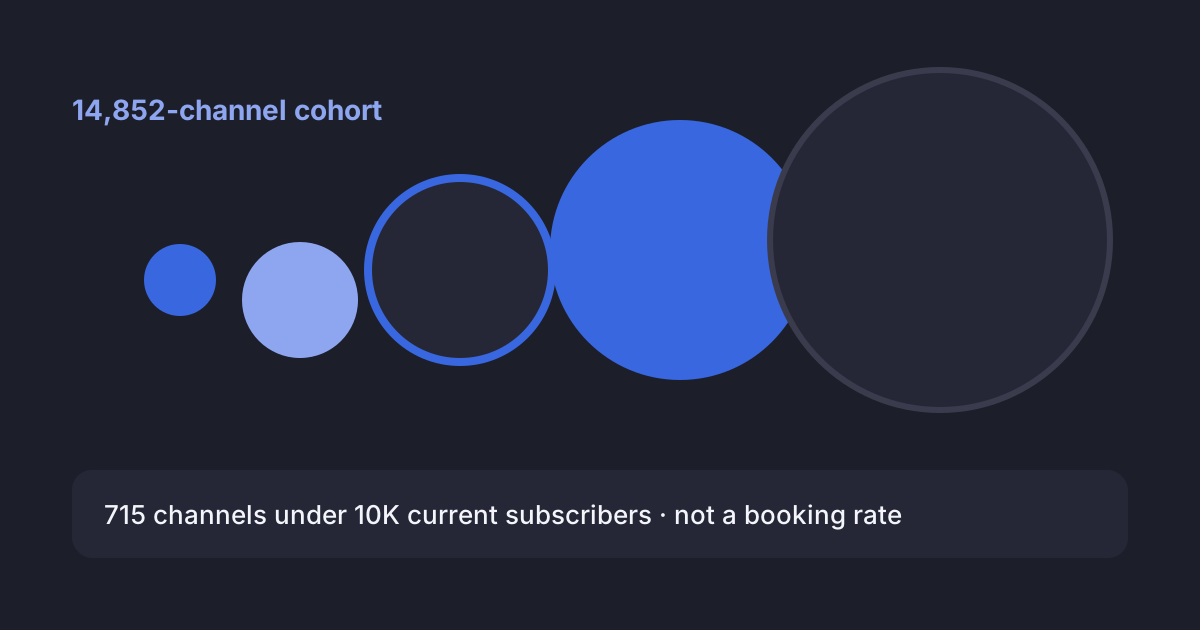
Sponsorbook analysed 14,852 complete subscriber snapshots collected on 25 and 26 August 2026. Every row belonged to a current visible catalogue channel with retained sponsorship evidence. The collection was a metadata-coverage job, so the results describe that cohort rather than every sponsored channel on YouTube or the whole Sponsorbook catalogue.
The median was 156,000 current subscribers. Twenty-three percent of the cohort sat below 50,000 and 38% sat below 100,000. At the other end, 1,791 channels had at least one million. The range is the important result. Sponsorship evidence appears across the audience-size curve, so a single subscriber cutoff discards too much context.
Can you get sponsored with 1K, 5K, or 10K subscribers?
So the literal answer is yes: the catalogue contains channels currently below each of those thresholds. The commercial answer still depends on the channel and company. Some rows may reflect a relationship formed before an audience changed, a highly specialised viewer group, a product exchange, or another arrangement whose price and terms are not public. The data proves possibility. It does not turn 1,000, 5,000, or 10,000 subscribers into a promise.
Why subscriber count cannot decide whether you are ready
A subscriber total is easy to compare, but it says little about the next video a brand would appear in. A focused 20,000-subscriber channel may reach a clear group of buyers on every upload. A broad 200,000-subscriber channel may have volatile views and no natural product integration. The brand has to evaluate the specific audience, expected delivery, subject, geography, creative treatment, and risk.
Current subscriber data creates another trap. The number available today is not necessarily the number the creator had when the sponsored video was published, much less when the relationship was negotiated. Sponsorbook keeps those concepts separate. A current audience snapshot can help you find comparable channels; it cannot reconstruct the buyer’s original decision.
A better sponsor-readiness check
- 1Your recent views are stable enough to forecastUse the median from a sensible run of comparable recent videos. Remove obvious outliers and Shorts if the proposed integration is for long-form content.
- 2A stranger can describe the audience in one sentenceThe useful version names the viewer’s job, interest, problem, or buying context. “People aged 18 to 34” is too broad to guide a sponsor decision.
- 3The product can belong in a real videoWrite the video premise and the point where the product becomes relevant. If the connection needs a paragraph of explanation, the fit is probably weak.
- 4Comparable channels already contain sponsor evidenceLook for channels with a similar content promise, language, typical views, and integration style. Shared subscriber range alone does not make two channels comparable.
- 5You can prove your own channel factsHave recent views, audience geography, retention, and prior campaign results available where you actually own that data. Do not fill gaps with industry averages.
When should a small channel start pitching?
Start when you can pass the readiness check and name a short list of companies with evidence of buying adjacent YouTube inventory. Early outreach should be narrow. Ten researched companies beat a hundred famous brands whose current activity, creator fit, and integration style are unknown.
The practical research method is to open three to five channels that genuinely resemble yours, collect the brands in their recent sponsorship histories, then inspect each brand’s repeat activity and actual sponsored videos. Small-channel commercial reading of this cohort is in YouTube sponsors for small channels. The similar-channel workflow is in how to find YouTube sponsors using similar channels.
Methodology and limits
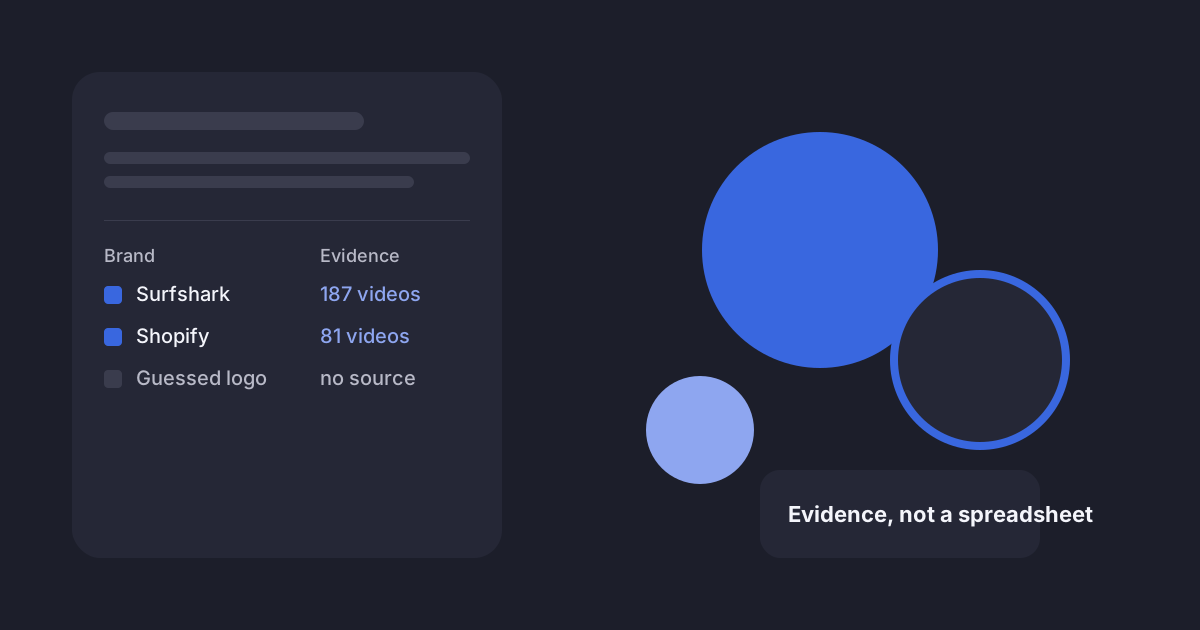
The analysis reads the reproducible Sponsor Graph channel-enrichment journal collected from 25 to 26 August 2026. It contains 14,933 attempted current catalogue channels: 14,852 complete rows and 81 transient failures. Subscriber values are YouTube’s displayed, rounded current counts. The cohort was the set of current visible catalogue channels that lacked retained profile metadata before the refresh. Sponsorbook’s catalogue unit is a sponsored video with retained public sponsorship evidence. It is not a confirmed contract, fee, campaign result, or cash payment. The extraction script lives with the marketing-site research tooling and should be rerun before a substantive update.