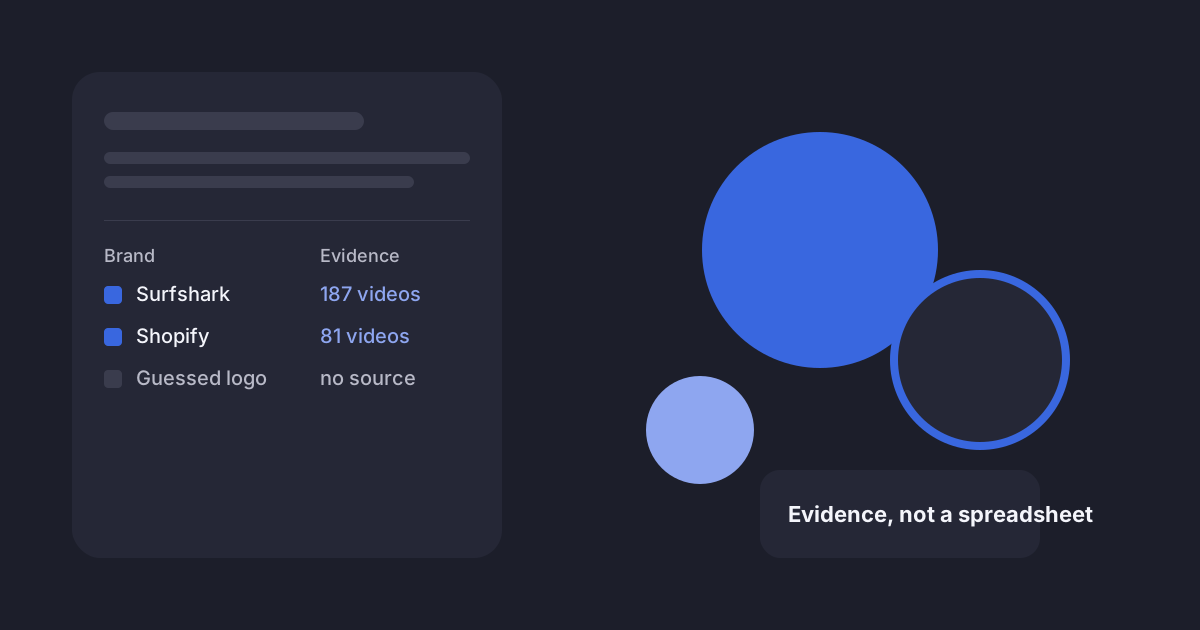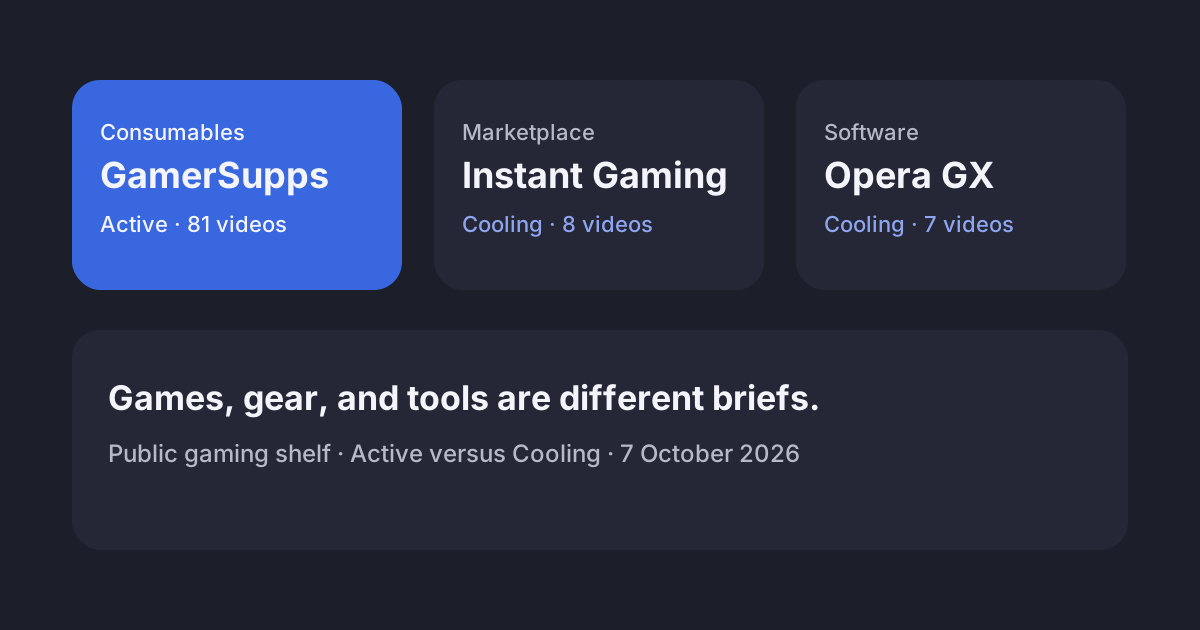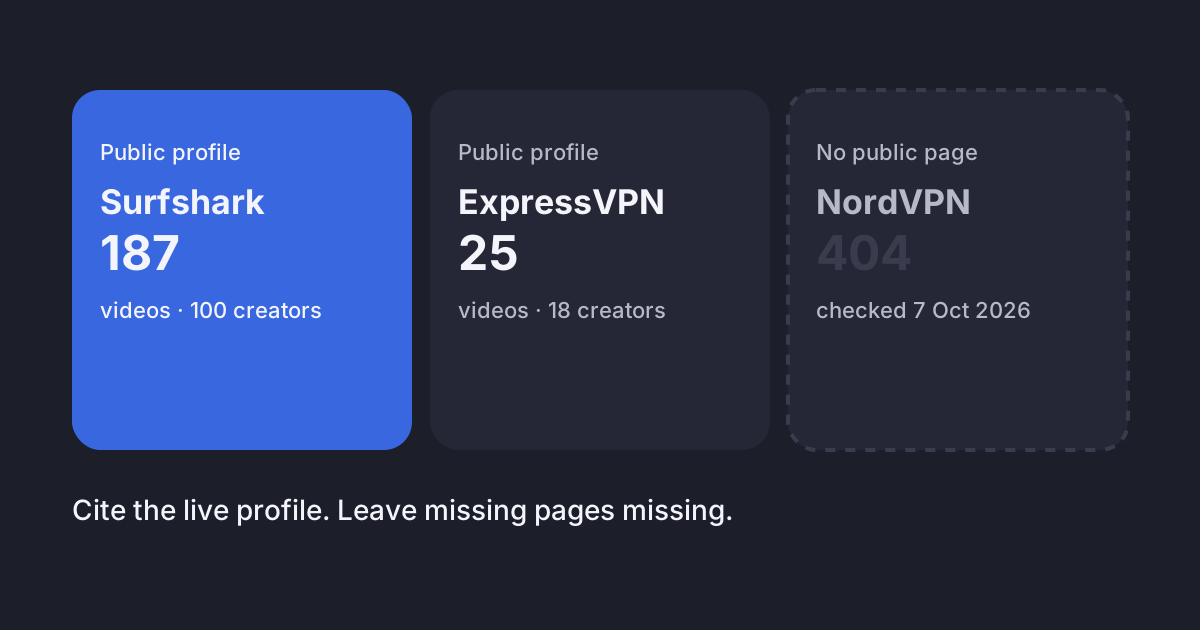
The fastest useful starting point is three to five channels that serve the same viewer in a similar context. Collect the brands in their sponsorship histories, preserve where each name came from, then remove companies whose activity is stale, whose product has no credible place in your content, or whose visible buying pattern sits far outside your delivery.
This method begins with observed buying behaviour. A famous company with no recent adjacent sponsorship evidence is a guess. A less famous company that repeatedly appears in relevant channels gives you something concrete to investigate: the creators, the video topics, the placement style, the dates, and the consistency of the relationship. The broader commercial playbook — spreadsheet failure, cadence, shortlist, and a compact pitch — is How to Find YouTube Sponsors (With Evidence, Not Guesswork).
Which channels are actually similar?
Subscriber count is one filter, not the definition. Two 100,000-subscriber channels can sell completely different audiences and deliver completely different view patterns. Choose reference channels by the commercial context surrounding the content.
- Content promise: Does the viewer arrive for the same kind of answer, entertainment, instruction, or analysis?
- Viewer use case: Would the same product solve a plausible problem for both audiences?
- Typical delivery: Are recent long-form views in a comparable range, after obvious viral outliers are removed?
- Language and market: Can the advertiser sell to the viewers you actually reach?
- Integration style: Do sponsors appear as host-read segments, demonstrations, dedicated videos, or another format you can credibly offer?
Build the raw sponsor pool
- 1Write down five reference channelsInclude two close peers, two slightly larger channels, and one specialist whose audience overlaps for a clear reason. Add one sentence explaining each choice.
- 2Collect every visible sponsor with provenanceFor each company, record the source channel, latest visible sponsored video, publication date, and a link to the evidence. Never keep a bare brand name with no path back to the video.
- 3Merge duplicate companiesOne row per brand. Preserve every source channel underneath it, because cross-channel recurrence can be a useful prioritisation signal.
- 4Open the brand-side historyCheck whether the apparent match is one isolated video or part of a wider pattern. Review the recent creator mix and the actual video topics before interpreting recurrence as fit.
Sponsorbook makes the provenance step less fragile. Search a reference channel, open its sponsor history, then move to the brand record to inspect recent creators and sponsored videos. The public Ground News profile is a clean example: the 26 August snapshot shows 99 sponsored videos across 46 creators in the preceding 12 months, with named July examples from Shoe0nHead and Channel 5. That supports a current-activity observation. It does not prove an open budget or guarantee a reply.
Remove weak prospects before you score anything
A research list earns its value through rejection. Remove a company if you cannot write a plausible integration for a real upcoming video, if the product cannot serve your viewers’ market, or if the only evidence is old and disconnected from current activity. Keep uncertainty visible rather than turning a missing field into a confident assumption.
Score the survivors with evidence, not enthusiasm
Use a small scoring model so every row faces the same questions. A five-point scale for each dimension is enough. Keep the underlying note beside the score, because “4 for fit” is useless six weeks later unless the reason survives.
What a finished prospect row looks like
A finished row should be intelligible to someone who did not do the research. “Ground News, found through Channel 5, latest visible example 24 July 2026, repeated current-affairs placements, proposed integration in our media-literacy episode, verify contact route” is usable. “Ground News, good fit” is not.
Turn one qualified row into an email
The next step is deliberately small: choose the strongest row and convert the evidence note into one opening sentence. Use the research-backed YouTube sponsorship email template to add your channel proof, video idea, and one easy next action.
Methodology and limits
This workflow uses public sponsorship evidence as a prospecting signal. A Sponsorbook sponsored video is a public YouTube upload with at least one retained sponsorship-evidence segment. Repeated evidence describes repeated observed appearances, not campaign performance, a retainer, exclusivity, or a confirmed cash payment. Public profiles are capped previews and should be rechecked on the day the research is used.